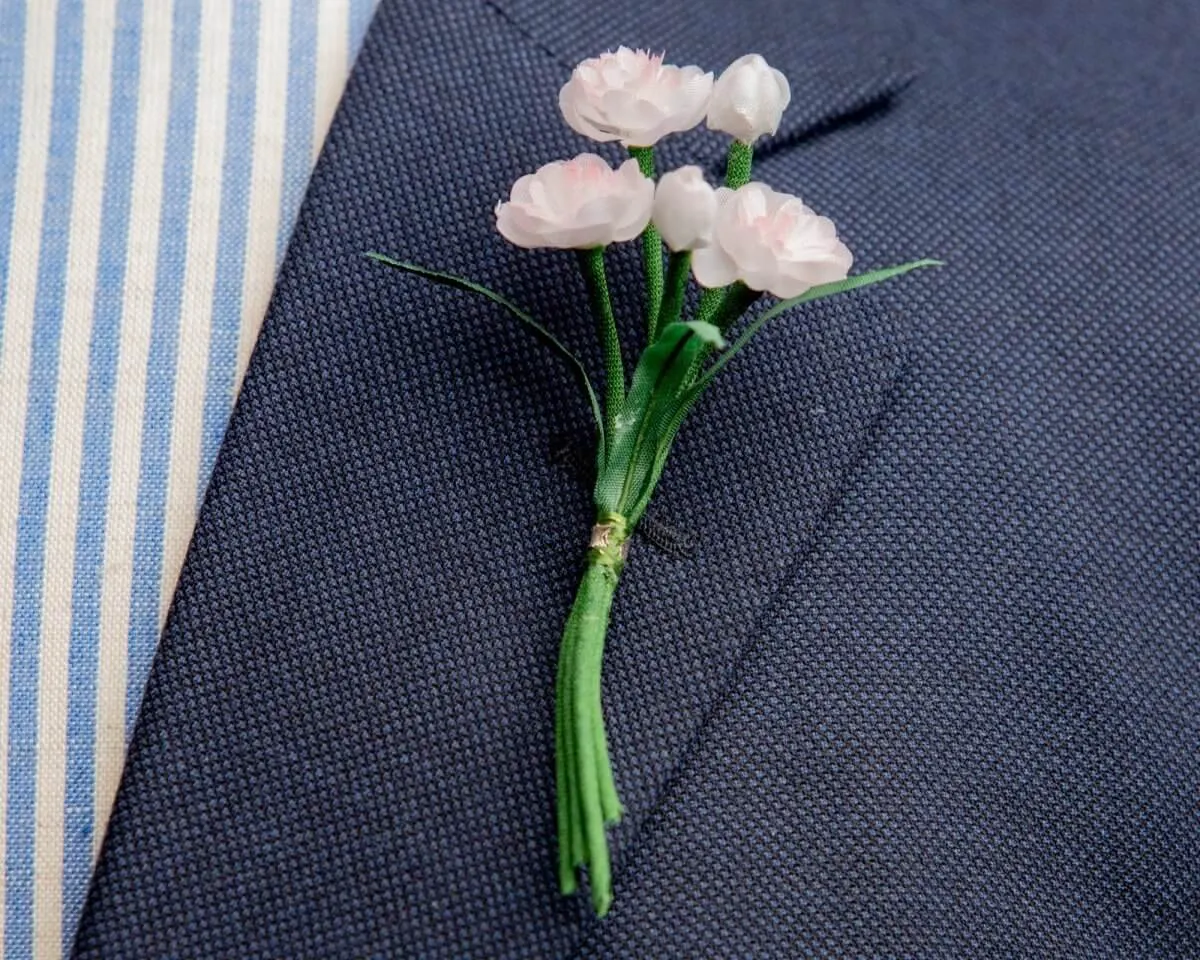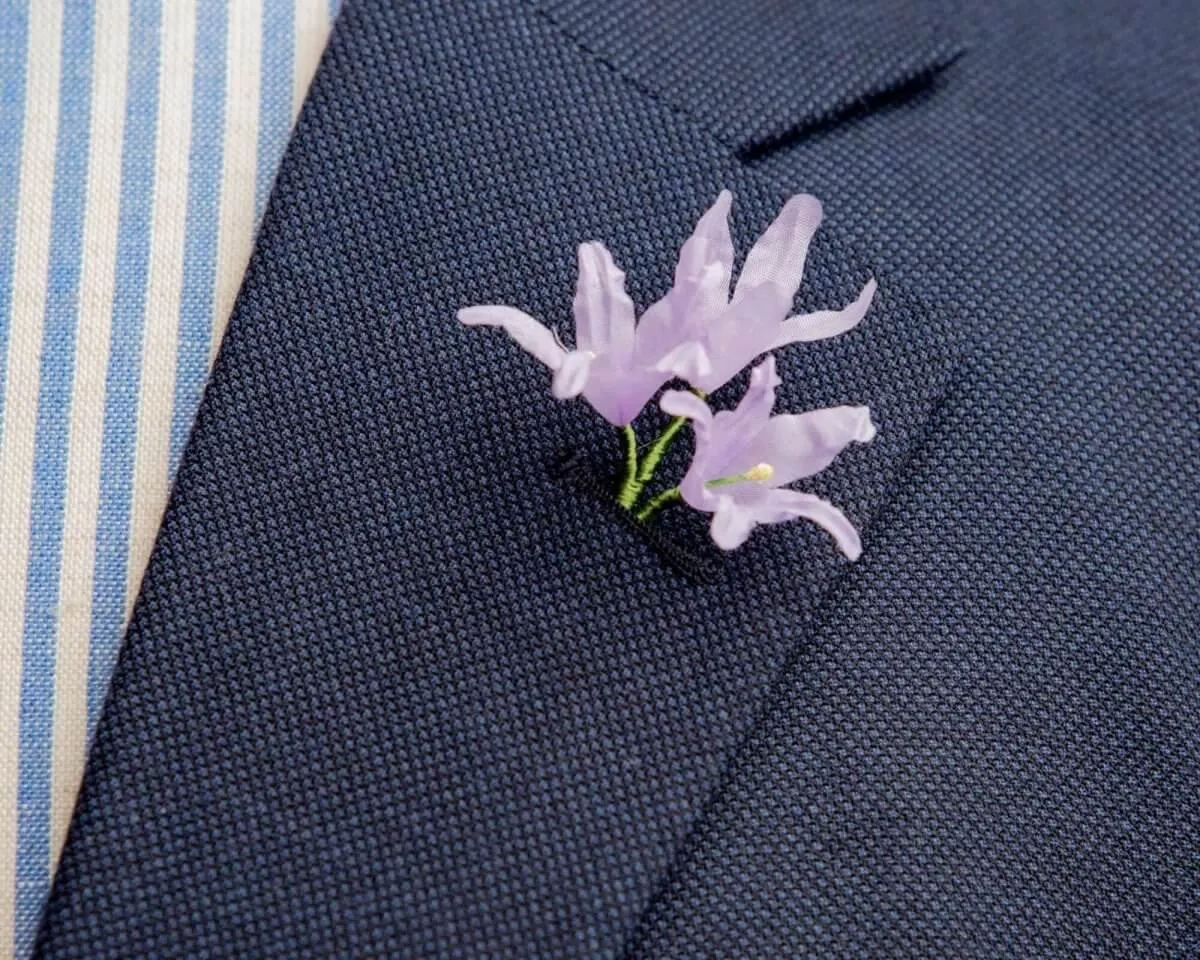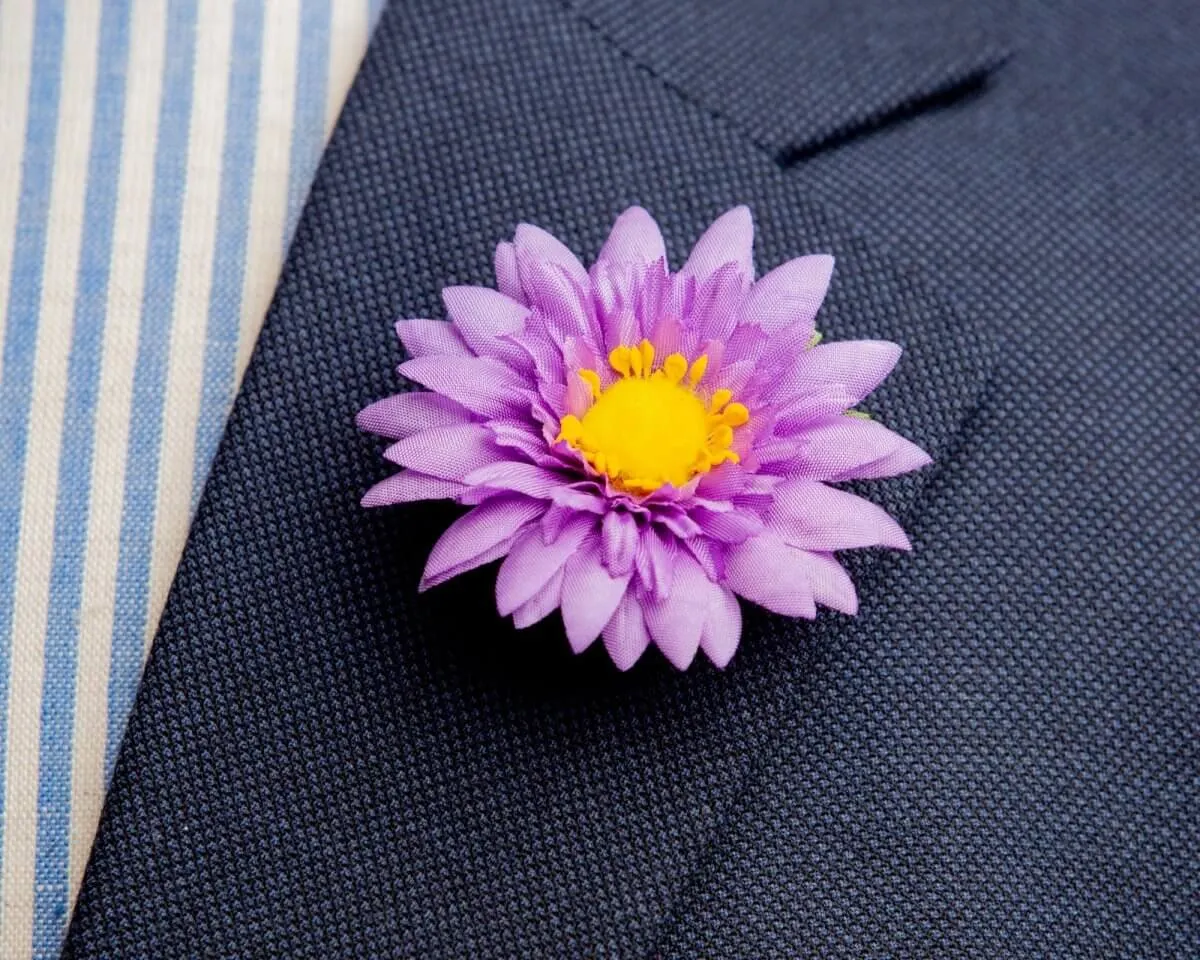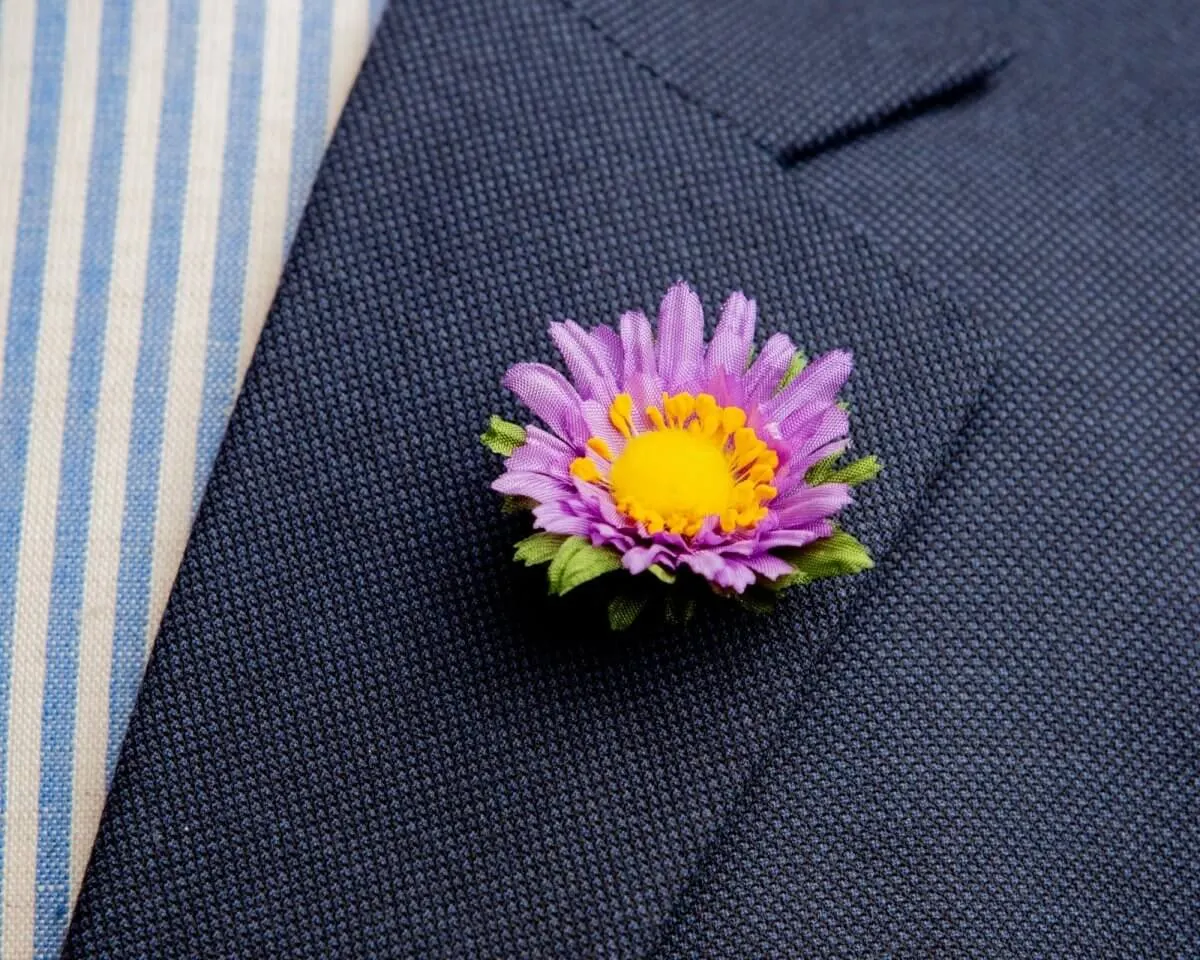
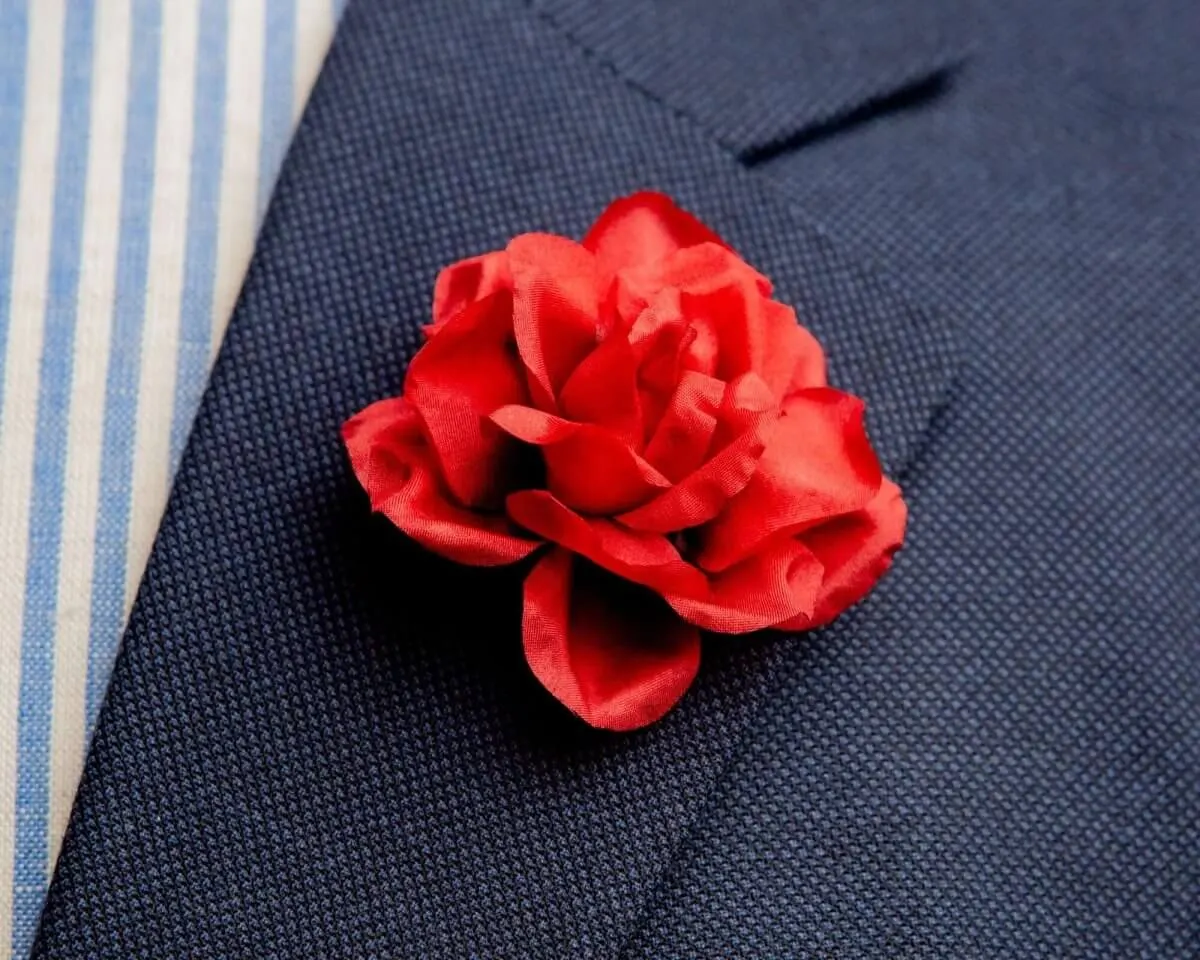
Boutonnière rose red (Rosa odorata)
Style archive · no longer available
The red boutonnière
The red rose is an excellent alternative to the classic red buttonhole to a tuxedo (black tie) or tailcoat (white tie). The silk-wrapped, flexible stem is therefore kept in black. So if he should inadvertently peek out from behind the lapel, that's no break in the legs, but rather testifies to the wearer's style confidence.
Traditional manufacturing
In every silk blossom there is an almost forgotten craftsmanship (not to be compared with products from Far Eastern countries). Plastic is not used here; Each boutonnière is built up individually and not simply put together or glued on. Recipes up to a hundred years old serve as the basis for dyeing the fabric. Are machines coming, e.g. for punching or embossing, it is a historical device - almost museum-like.
The boutonnière in detail
- Red color
- Material: 100% silk
- Stem: flexible wire loop wrapped in black silk
- Size of the flower: approx. 6 cm in diameter; approx. cm 3 height
- Handmade in Germany | Handcraft from Germany
- Each silk flower is unique; minor deviations are possible
- Including gift box
- Item number: 065R
Care instructions: Always protect from moisture and store in the gift box provided. Every boutonnière box will exclusive by one of the oldest family businesses in Berlin, founded in 1869 as a hat box manufacturer, made in the Neukölln district.
More info
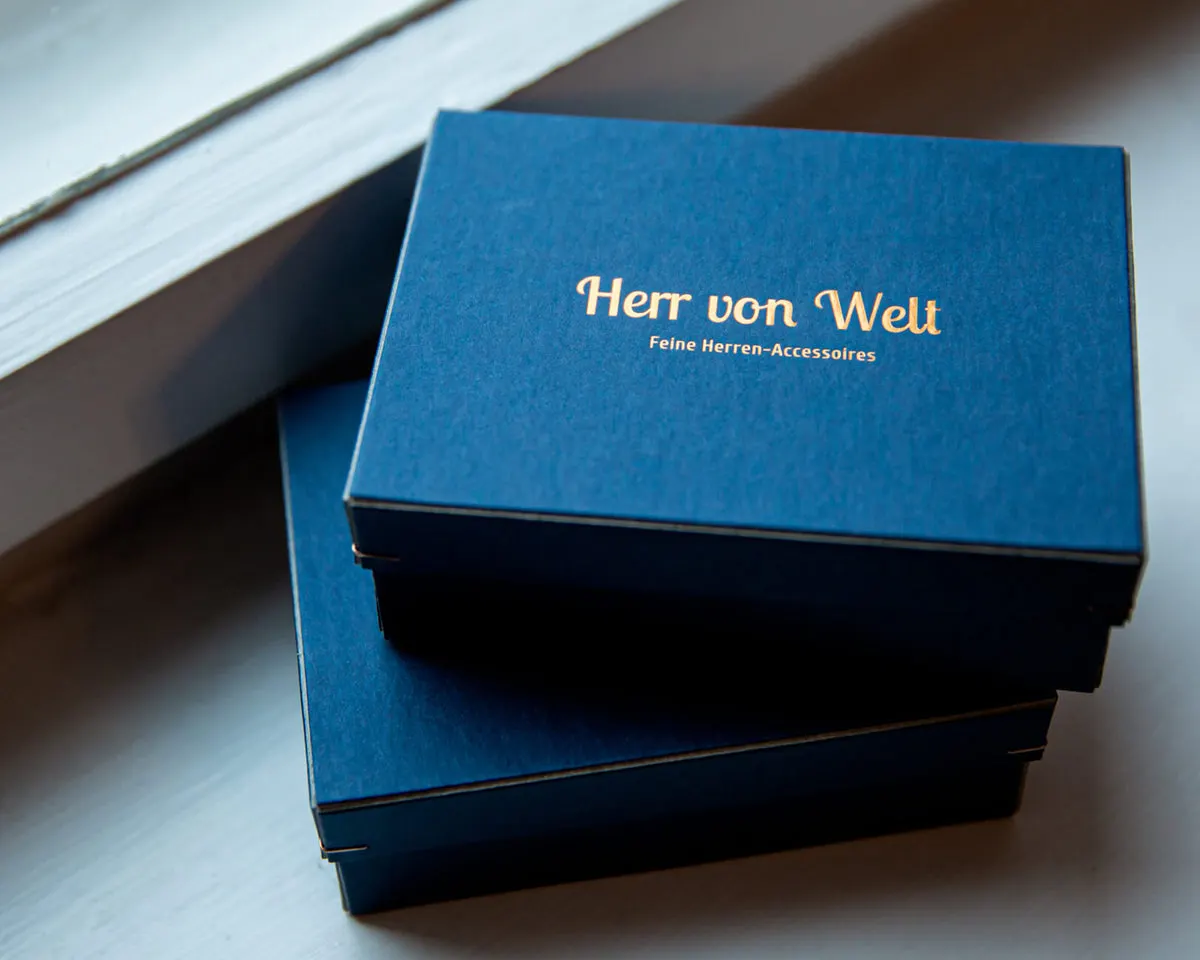
Boxes from Berlin
The boutonnière boxes are made for us by one of the oldest family businesses in Berlin, founded in 1869 as a hat box manufacturer, in the Neukölln district. High-quality fine cardboard boxes with tradition - in the fifth generation.
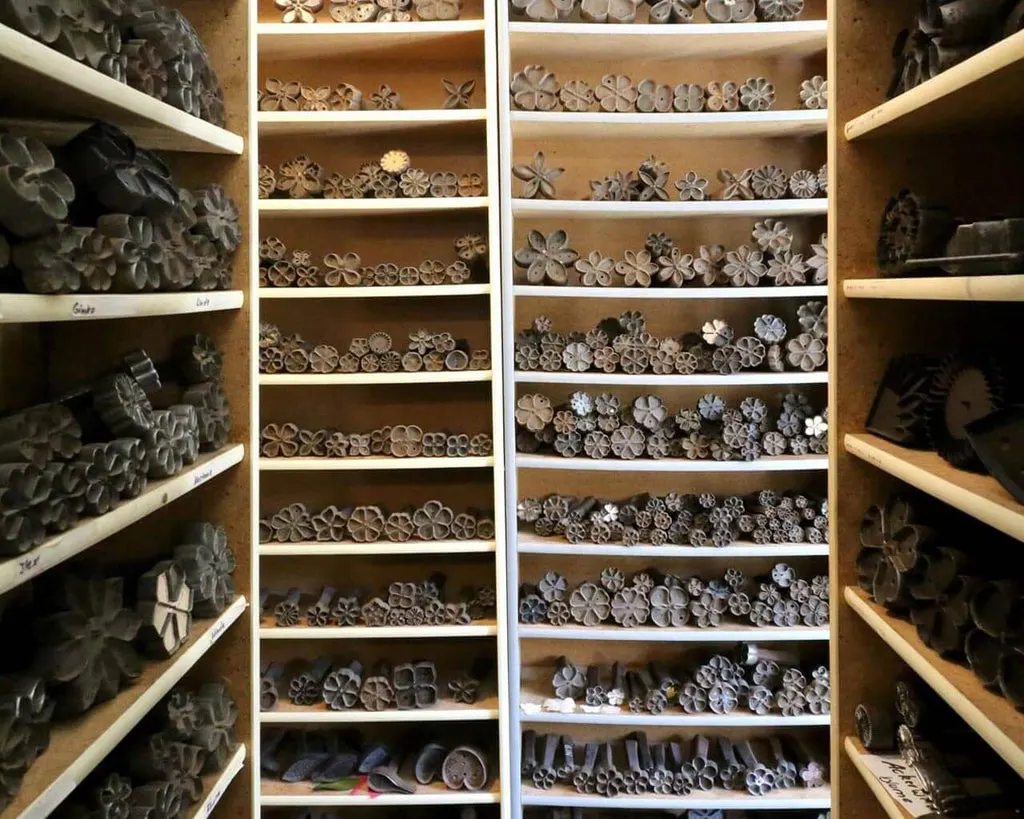
The archive
Here, carefully preserved for more than a hundred years, are the historical dies that are still used today. Each boutonniere is made by hand. Each boutonnière is unique and should be protected from moisture and rough hands.
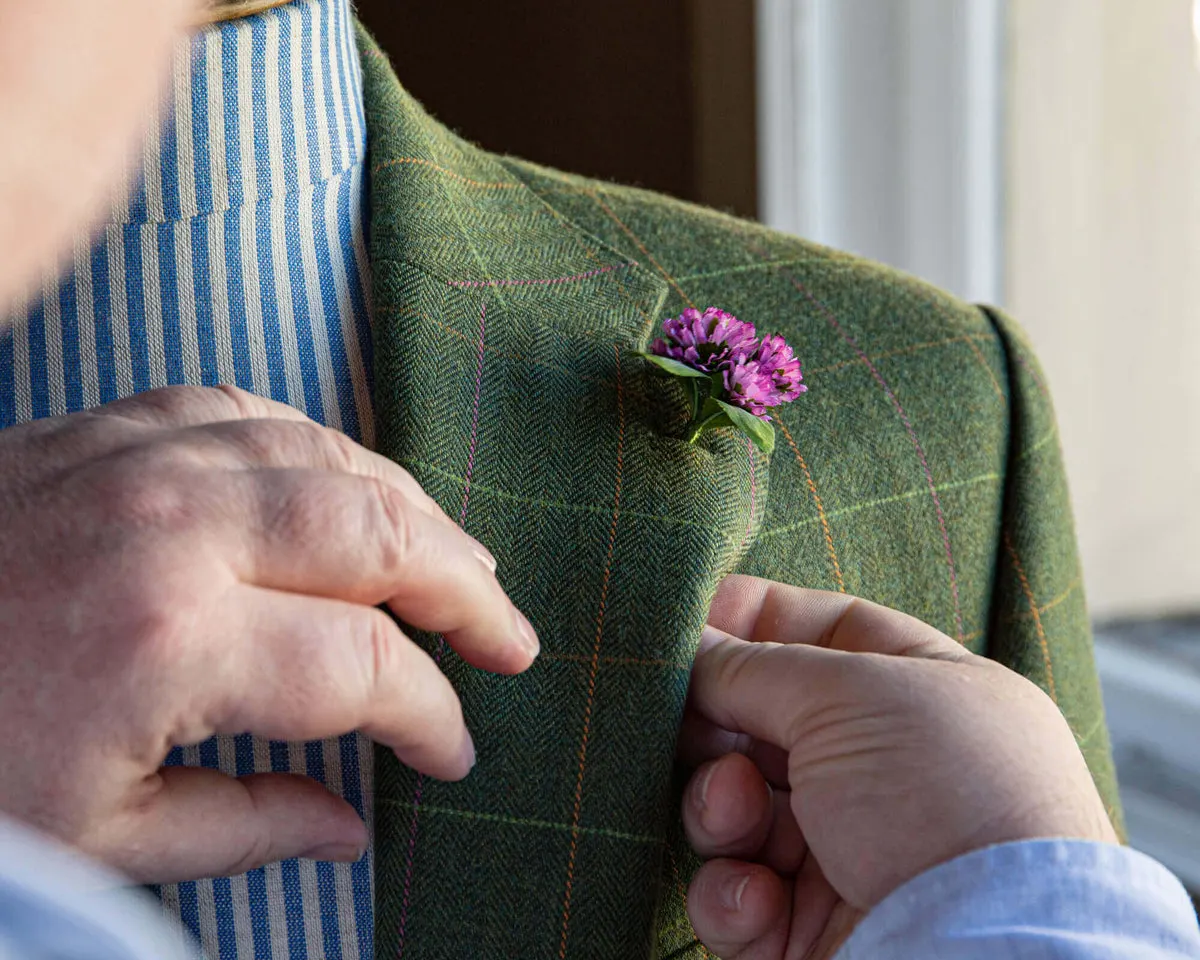
Handcraft from Saxony
There is old craftsmanship in every boutonnière - since 1834. Not to be compared with products from the Far East. No plastic. The flower is carefully constructed and not just put together or glued. Old original recipes serve as the basis for silk dyeing.